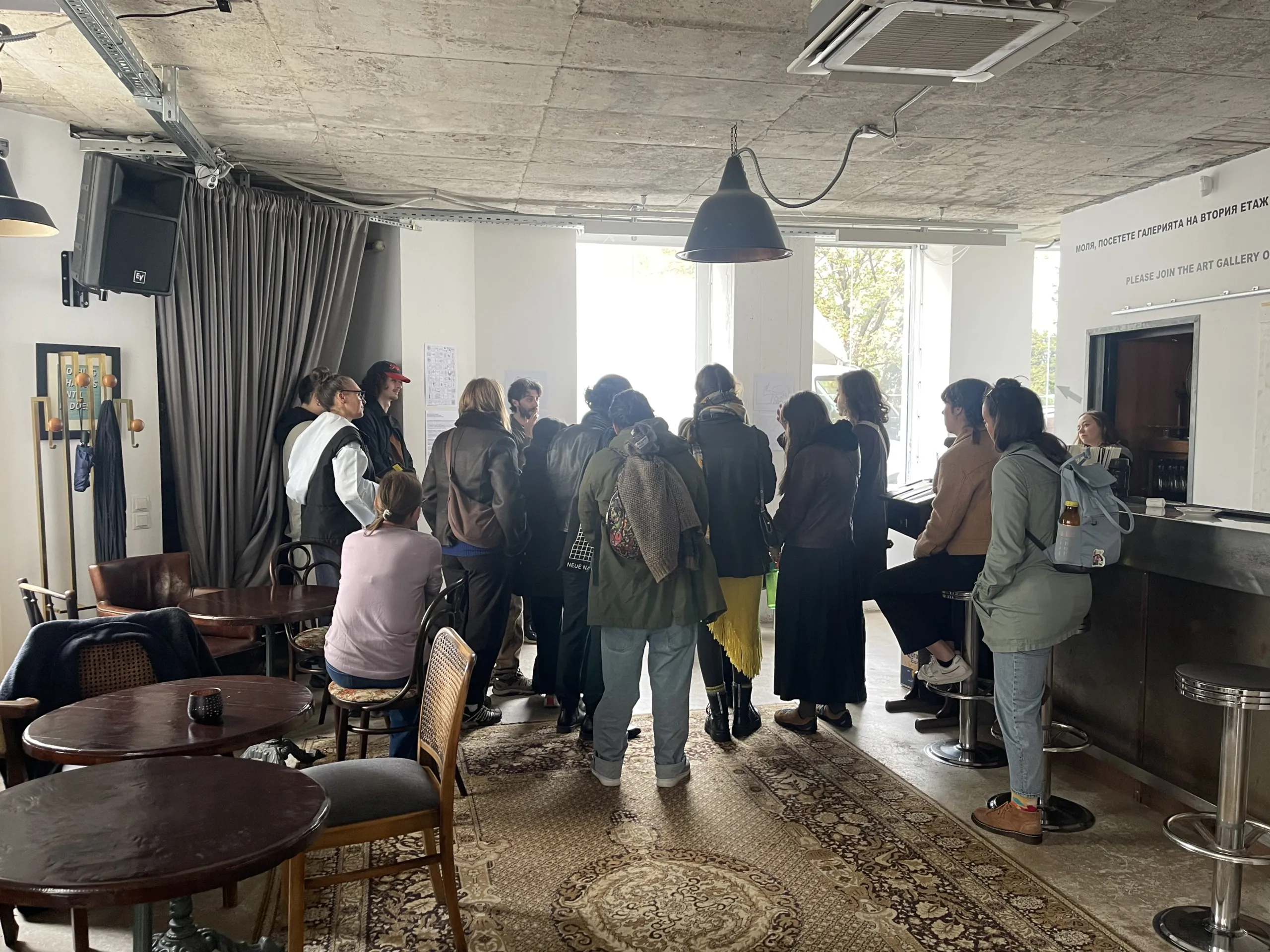
DA FEST is an international digital arts festival organized by the National Academy of Arts in Sofia and the DA LAB Foundation. Established in 2009, it presents contemporary artistic practices in the field of new media through exhibitions, performances, screenings, and research formats.
The tenth anniversary edition of the festival (2025) is held under the theme ‘æŋˈzaɪəti (Anxiety): Signals from an Uncertain World’ and includes a large-scale program of events in various spaces across Sofia.
The festival features approximately 14 exhibitions, as well as 5 performances, 5 screening programs, lectures, presentations, and workshops, located in over 15 venues throughout the city.
The exhibition program includes solo and group projects by international artists, as well as installations, video, and sound environments presented in galleries, museums, and alternative spaces. Some of the exhibitions continue beyond the main festival days, forming an extended program.
Dorotea Dolinšek (Slovenia)
Dorotea Dolinšek is an artist based in Ljubljana. She holds a Bachelor’s degree in Painting from the Accademia di Belle Arti di Venezia and is currently pursuing a Master’s degree at the Academy of Fine Arts and Design in Ljubljana, in the Video and New Media department. Her practice explores the intersection of ecology and technology, focusing on extreme environments—particularly outer space—contrasted with the profound ecological crisis on Earth. She has participated in exhibitions both locally and internationally, including at Kapelica Gallery (Slovenia), Ars Electronica (Austria), the Museum of Contemporary Art (Croatia), 798 Cube (China), and others.
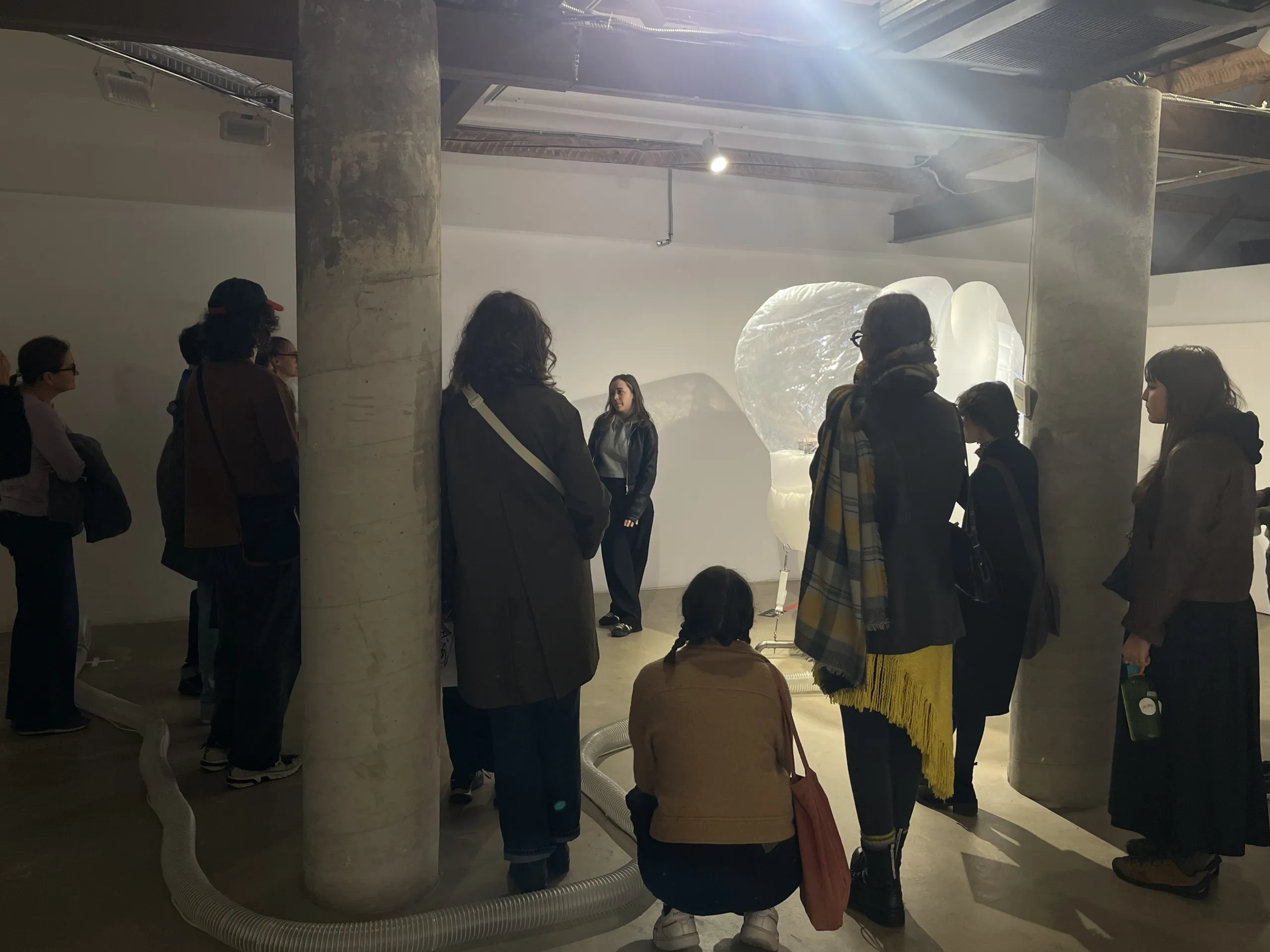
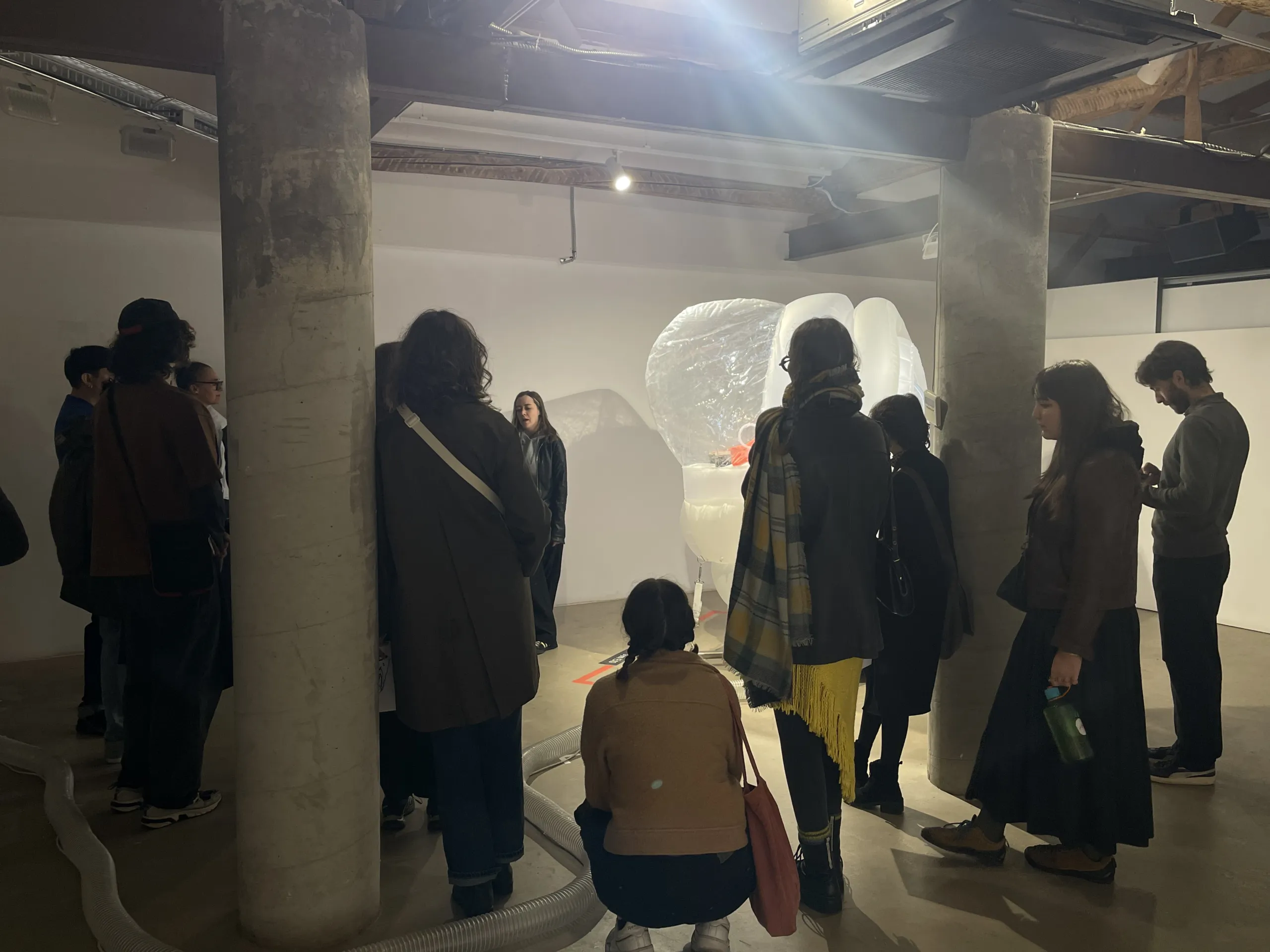
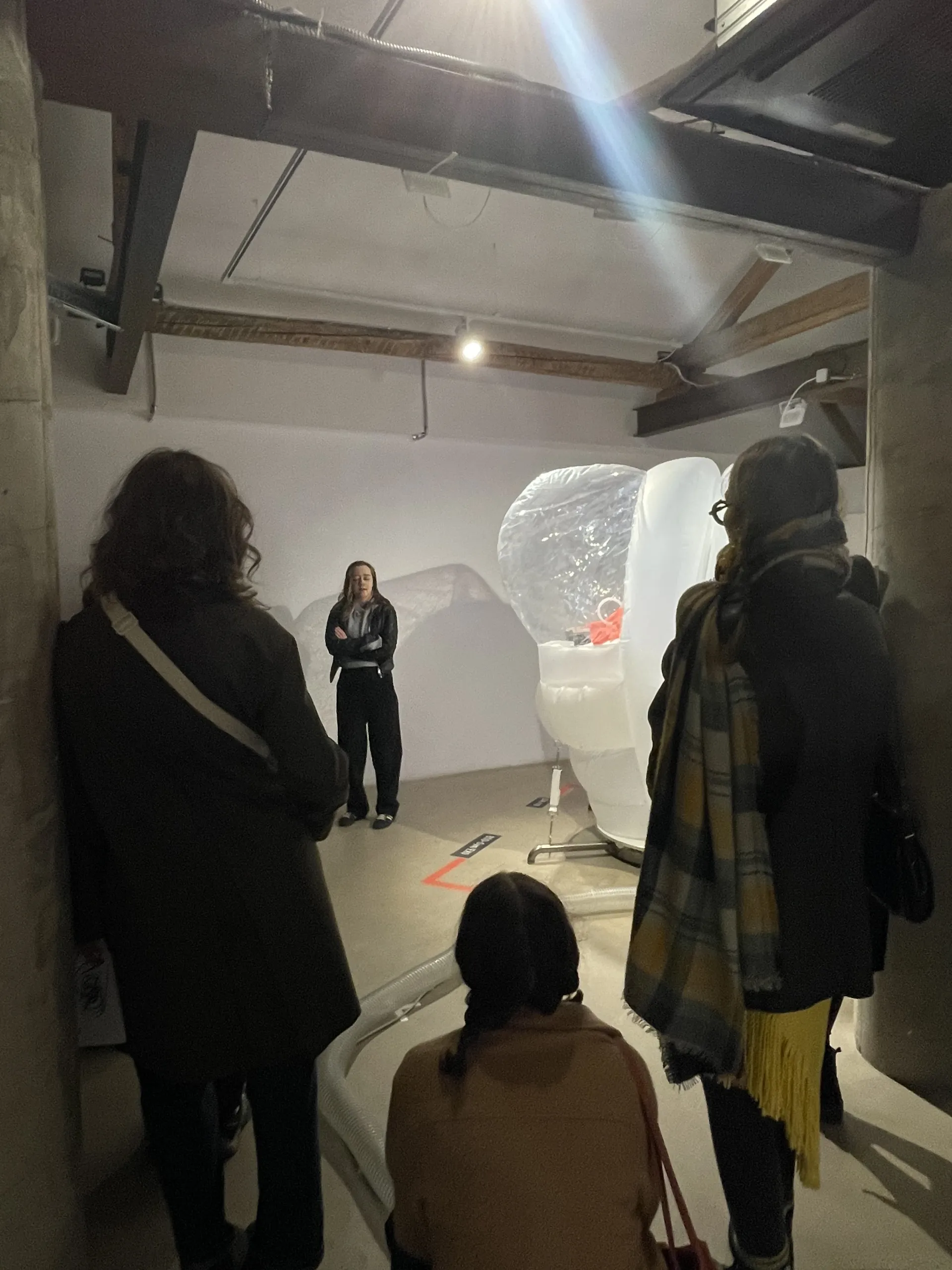
Biosymbiotic Exoskeleton
Biosymbiotic Exoskeleton is an inflatable spacesuit that enables symbiotic coexistence in a radical extraterrestrial environment with the bacteria, fungi, archaea, and viruses that constitute the human microbiome. The suit becomes an ecology of organisms, dissecting the body into separate parts for which specific care and maintenance can be developed to prevent dysbiosis that threatens the organism’s normal functioning.
The body, disassembled per partes, becomes an organized system for which living conditions different from those known on Earth can be created, transforming the very modes of existence. Through the ‘reverse engineering’ of an imaginary situation in space where the human body changes its form, projections are made regarding the possibilities for survival on an ecologically altered planet. In this perspective, the body is conceived as a network of functions, rhizomatically connected across different species.
The microbiome as an organ plays a key role in survival—not only in an ontological sense but also in a deeply personal and intimate one. To be alive means to exist in symbiosis with non-human living systems that transcend the physical boundaries of the human body.
Pietro Lugaro and Alessandro Mc-Nelly (Italy/Germany)
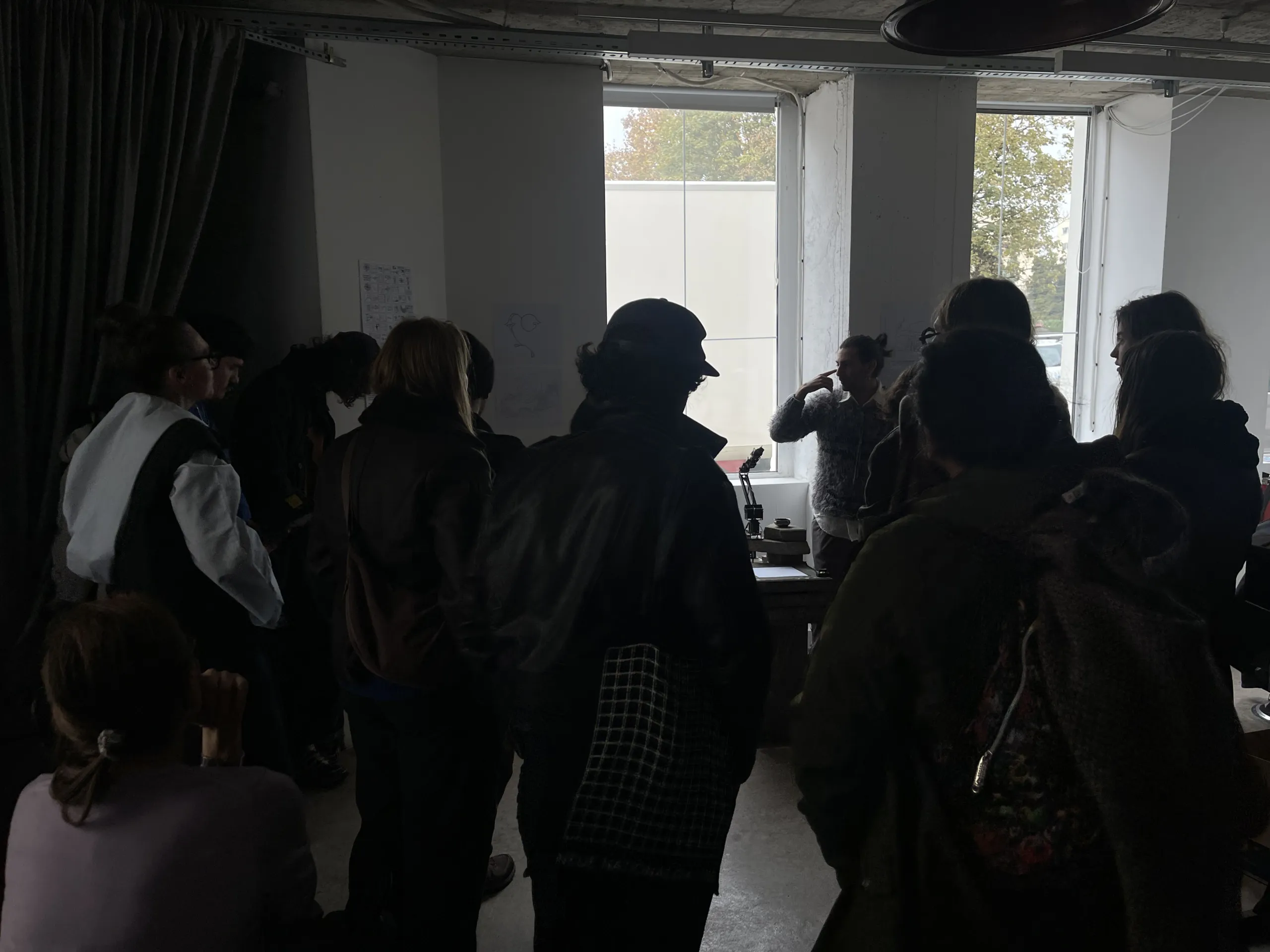
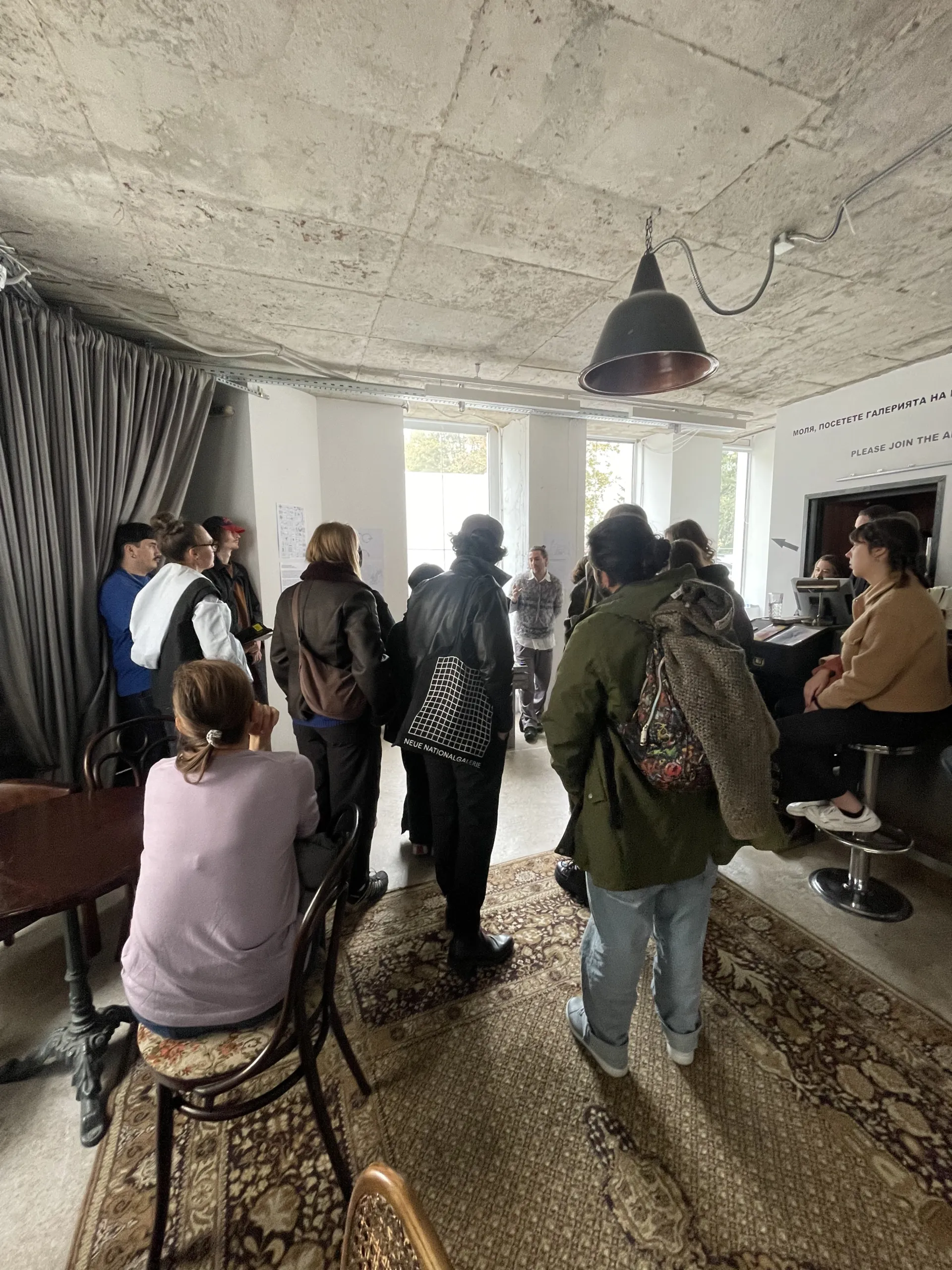
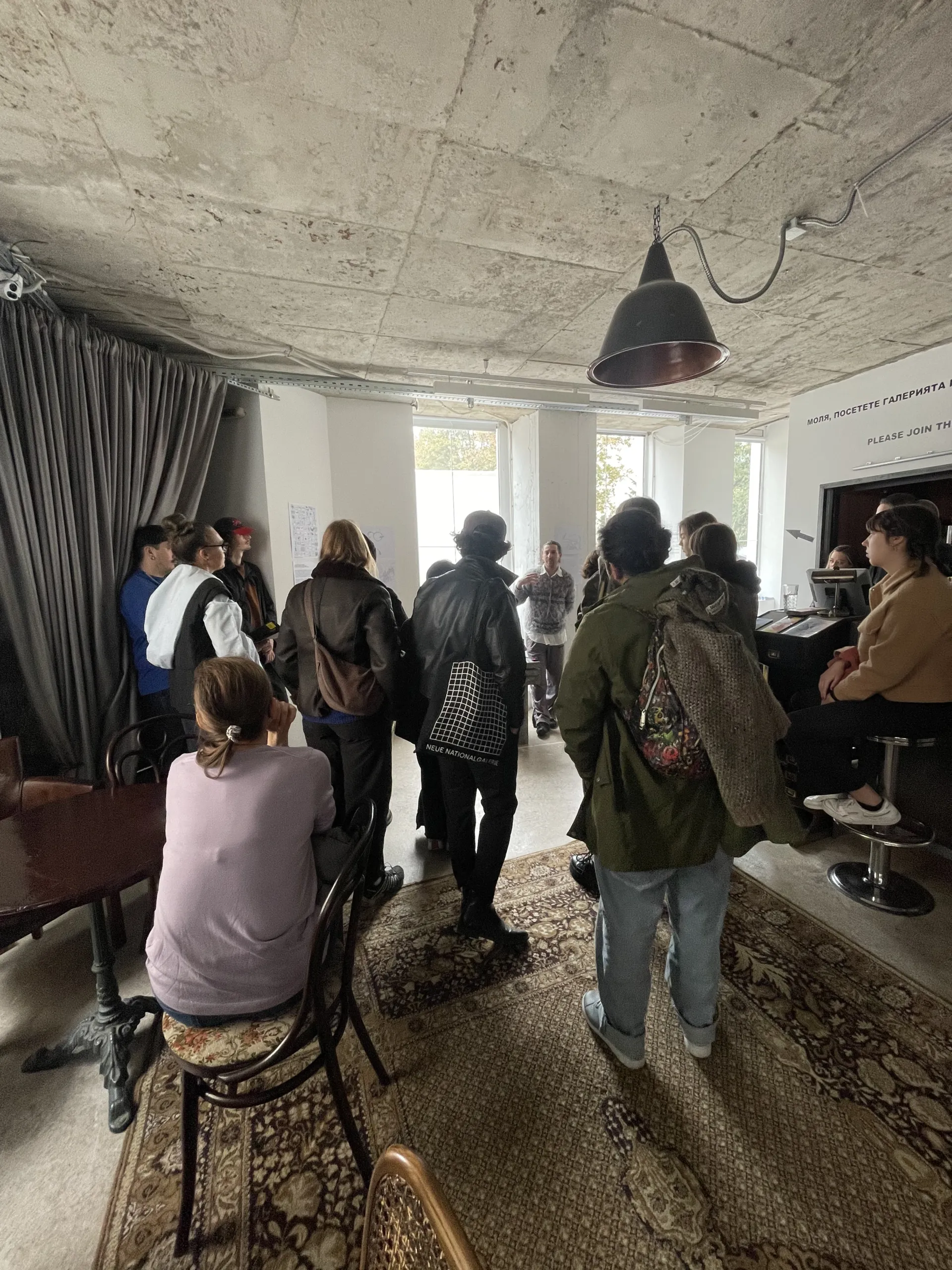
ACV (Algorithmic Cultural Vandalism)
Interactive installation, 2024
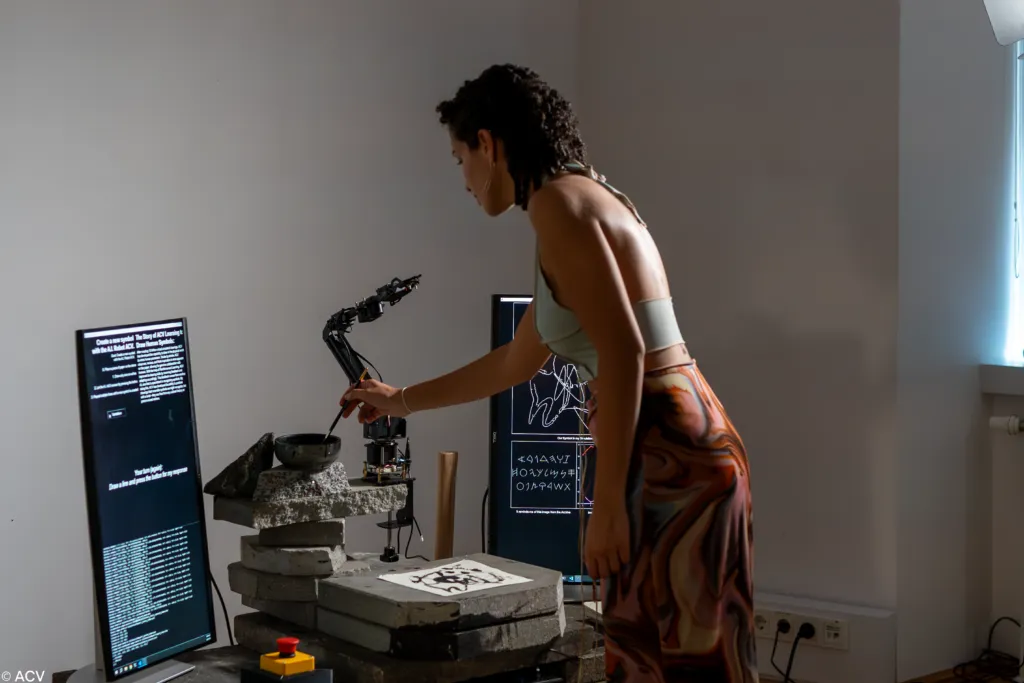
ACV (Algorithmic Cultural Vandalism) is a research project that explores the relationship between symbolic language and algorithmic manipulation. The project examines the behavior of cultural symbols within technical systems, tracing the tension between sign and meaning.
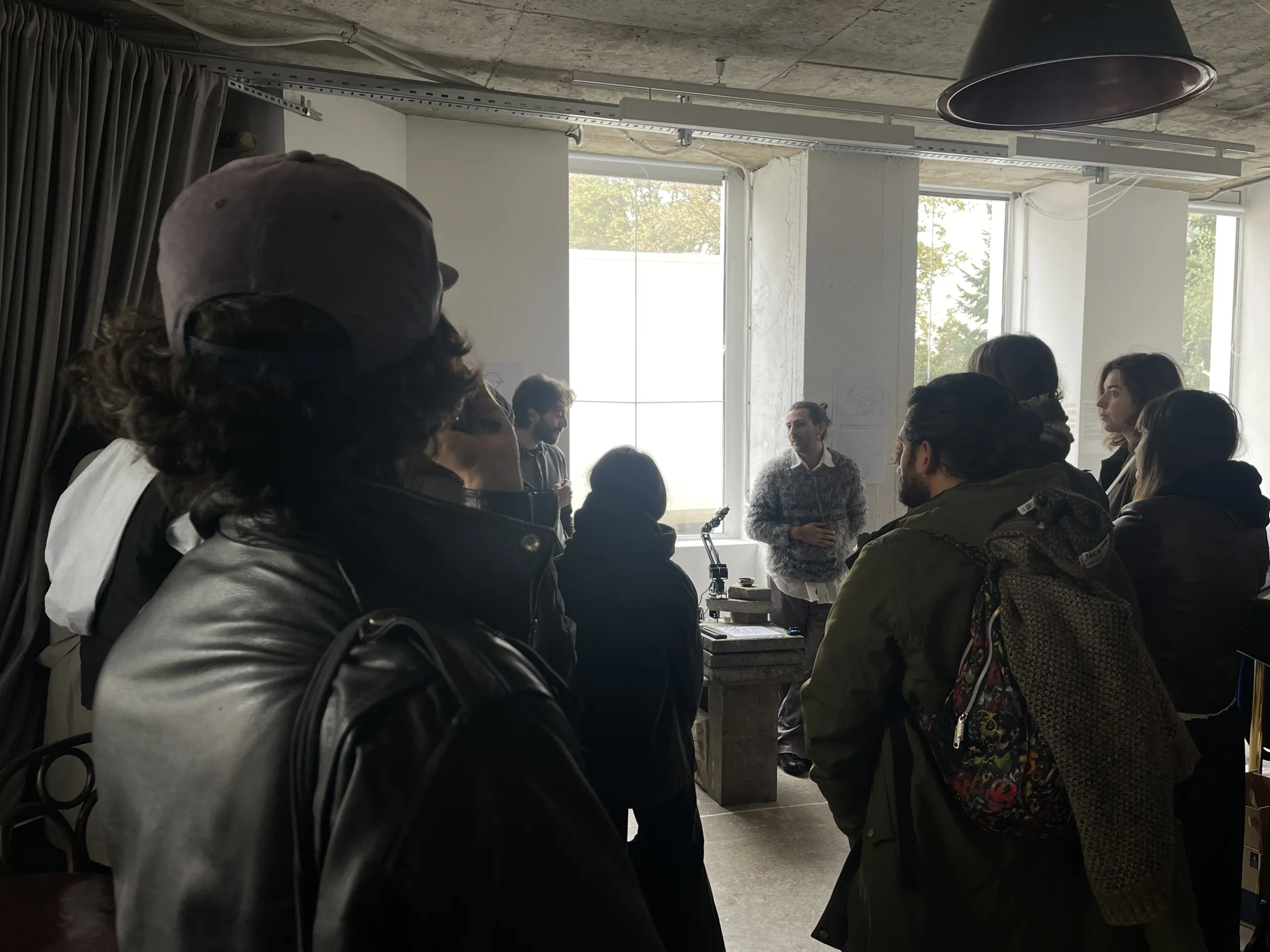
The installation invites visitors to interact with a robotic arm powered by artificial intelligence trained on an archive. In a process of collaborative action, prototypes of symbols are generated, moving toward a state of aesthetic immanence. Through this exchange between human and machine, pseudo-symbols emerge in a continuous cycle, while the boundary between a meaningful sign and a random gesture remains fluid.
The act of drawing with another intelligence gives rise to moments of ambiguity and misinterpretation, becoming an essential part of the experience. The archive and the algorithm are constructed to avoid interpretation, focusing solely on the morphology of signs without assigning them meaning. This refusal functions as a form of ‘unlearning,’ opening a space for speculation, symbolic friction, and new modes of visual thinking beyond representative logic.
Pietro Lugaro is an artist with a research-based approach who works on the origins of language, diagrammatics, and the cultural logic of scribbles. Educated at the Accademia di Belle Arti in Carrara and Urbino, his practice is based on post-situationist methods and encompasses editorial design, computational aesthetics, and linguistic speculation.
Alessandro Mc-Nelly is an art researcher working with robotics, machine learning, and AI-driven visual systems. With a background in architecture (HTWG Konstanz), he completed a Master’s in Design & Computation at UdK/TU Berlin, where he focused on media didactics and the pedagogical potential of AI.
The two are co-founders of the ACV project, which was awarded the Ars Electronica Campus Prize (2024).
Instagram: @ptoire_ @mcalessandro