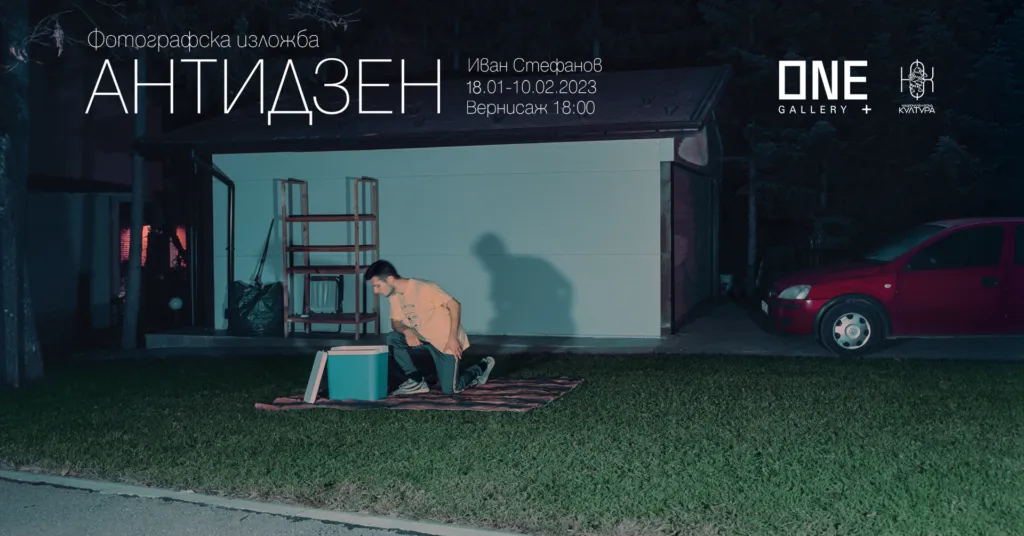
Ivan Stefanov | Antizen Historically, the photographic image has always been associated with an understanding of its unquestionable authenticity. This traditional notion of the photographic image’s univocal nature rejects its layered characteristics and fails to account for the fragmentation of space and its meanings. Ivan Stefanov’s ten medium-format film photographs from the Antizen series reject this traditional concept of photography. The theme and title of the exhibition Antizen are directed toward the hidden essence of everyday life and the material sophistication of modern man—his disharmony, troubling desires, and social arrangements—set against the harmony and balance of Zen models in Eastern philosophy. In his research, the author constructs a new condition of the photograph, in which the digital post-production of the image destabilizes it as a record of the state of reality. These new possibilities of the photograph, defined by Susan Sontag as the “transporting role of the image,” reveal different potential overlays and generate multiple perspectives. Ivan Stefanov restores the status of our familiar everyday life by projecting onto it new, seemingly unknown meanings, determined through speculation on the individual’s unnatural, uncomfortable situations in the urban environment. Banal existence is transformed into a new, almost documentary reality, in which the author constructs visual images shaped by a specific cultural norm. The reality confronted by the figures in these photographs generates a new historical reality, involving a complex formation of codes of conduct, rules, social norms, gestures, and so on. The re/production of these photographic images and the appeal of the images themselves reinforce the importance and impact of this medium. The viewer witnesses this new space, measured not only by its technical parameters, but by a complete reconfiguration of reality, leading to a shift in perception and a new understanding of the idea of the image. In this case, the photographic medium itself is directed toward self-reflection. This is the “cinematic photography” defined by Jeff Wall, in which events are carefully staged and have an “almost documentary” impact. The cinematographic photographs in the exhibition are composed like classical paintings, bearing the marks of the objectivity of the event. They are almost documentary, yet at the same time they preserve the physical nature of the medium. This also signals a new attitude of photography toward painting. In the presented hybrid, composite images, photography and painting merge into works of art that can be defined as a shift in communication and a deliberate creation of a multi-layered image. Ivan Stefanov does not superimpose the documentary, but relates to it, speculating on its credibility. He does not depict specific situations, but a representation of those situations. It could be said that this marks the end of objectivism in photography—a view that paralyzed photography rather than offering clarity about its possibilities—bringing us to Wall’s understanding that “we can now see the possibility of a photography evolving as photography.” Genadi Gatev With the support of the National Culture Fund.